
Refurbishment & contractor support
Electrical stages that fit the programme
Builders, main contractors, landlords and property managers — supported with electrical work planned against the build sequence, access and the other trades on site.
- Builders
- Contractors
- Fit-out
- Phasing
- Handover

Scope
Twelve areas of refurbishment and contractor support
On project work the electrical package is one part of a sequence. These are the areas that determine whether it lands cleanly.
- RC-01
Domestic refurbishment
Electrical work within house renovations, extensions, loft conversions and whole-property improvement projects.
- RC-02
Commercial refurbishment
Strip-out, alterations, new distribution arrangements and reinstatement within commercial refurbishment programmes.
- RC-03
Builders
Electrical stages within building work, attended to suit the build sequence rather than in isolation from it.
- RC-04
Main contractors
Defined electrical packages within a wider programme, with coordination against the contractor’s dates and site rules.
- RC-05
Landlords
Void works, turnaround between tenancies, identified remedial work and documentation for letting purposes.
- RC-06
Property managers
Managed premises, common parts, tenant interfaces and planned electrical work across a portfolio.
- RC-07
Fit-outs
Containment, distribution, small power, lighting, controls and final connections through a fit-out sequence.
- RC-08
Scheduling
Attendance planned against the programme, with dependencies stated openly rather than assumed away.
- RC-09
Phases
Work divided into stages so each lands at the right point and areas can be closed up on time.
- RC-10
First fix & second fix
Referenced as general industry stages: the cabling and containment phase, then accessories, fittings and connections.
- RC-11
Other trades
Sequencing around plastering, joinery, flooring, decoration, mechanical works, kitchen and shopfitting installers.
- RC-12
Testing & handover
Verification appropriate to the work carried out, documentation, and a clear handover of the electrical stage.
Refurbishment & contractor support
Electrical work that arrives in the right order
On refurbishment and fit-out projects the electrical package is rarely the constraint — the sequence is. Gridline works to the programme rather than around it.
-
Builders
Electrical stages within domestic and commercial building work, attended to suit the build sequence.
-
Main contractors
Defined electrical packages within a wider programme, with coordination against the contractor’s dates.
-
Landlords
Void works, turnaround between tenancies, identified remedial work and documentation requirements.
-
Property managers
Common parts, tenant interfaces, reactive enquiries and planned electrical work across managed premises.

- R1
Refurbishment projects
Domestic and commercial refurbishment where electrical work is one element of a larger set of changes.
- R2
Electrical stages
Work broken into stages so it lands in the right order — containment and cabling before finishes, accessories and fittings afterwards.
- R3
First fix & second fix
Referenced here as general industry stages: the cabling and containment phase, then the accessory, fitting and connection phase.
- R4
Access
When areas are available, what is open, what is closed up, and what has to be revisited if access changes.
- R5
Scheduling
Attendance planned against the programme, with realistic dependencies rather than optimistic assumptions.
- R6
Other trades
Sequencing around plastering, joinery, flooring, decoration, mechanical works and kitchen or shopfitting installers.
- R7
Site coordination
Agreeing isolation, working areas, storage, waste and the point of contact for day-to-day decisions.
- R8
Handover
Completion of the electrical stage, verification appropriate to the work, documentation and a clear handover point.
Site coordination
What the programme actually depends on
Electrical work on a project is almost entirely dependency-driven. Attendance dates are only as reliable as the conditions they assume, which is why those conditions are stated rather than implied.
Where work requires particular qualifications, approvals, notifications, specialist contractors, distribution network involvement, building control, landlord approval, or other third-party requirements, these should be confirmed as part of the project.
- Agreed isolation and safe working arrangements
- Working areas, storage and waste arrangements
- A single point of contact for day-to-day decisions
- Notice periods for attendance and revisits
- Variation process agreed before work begins
- Documentation expected at handover
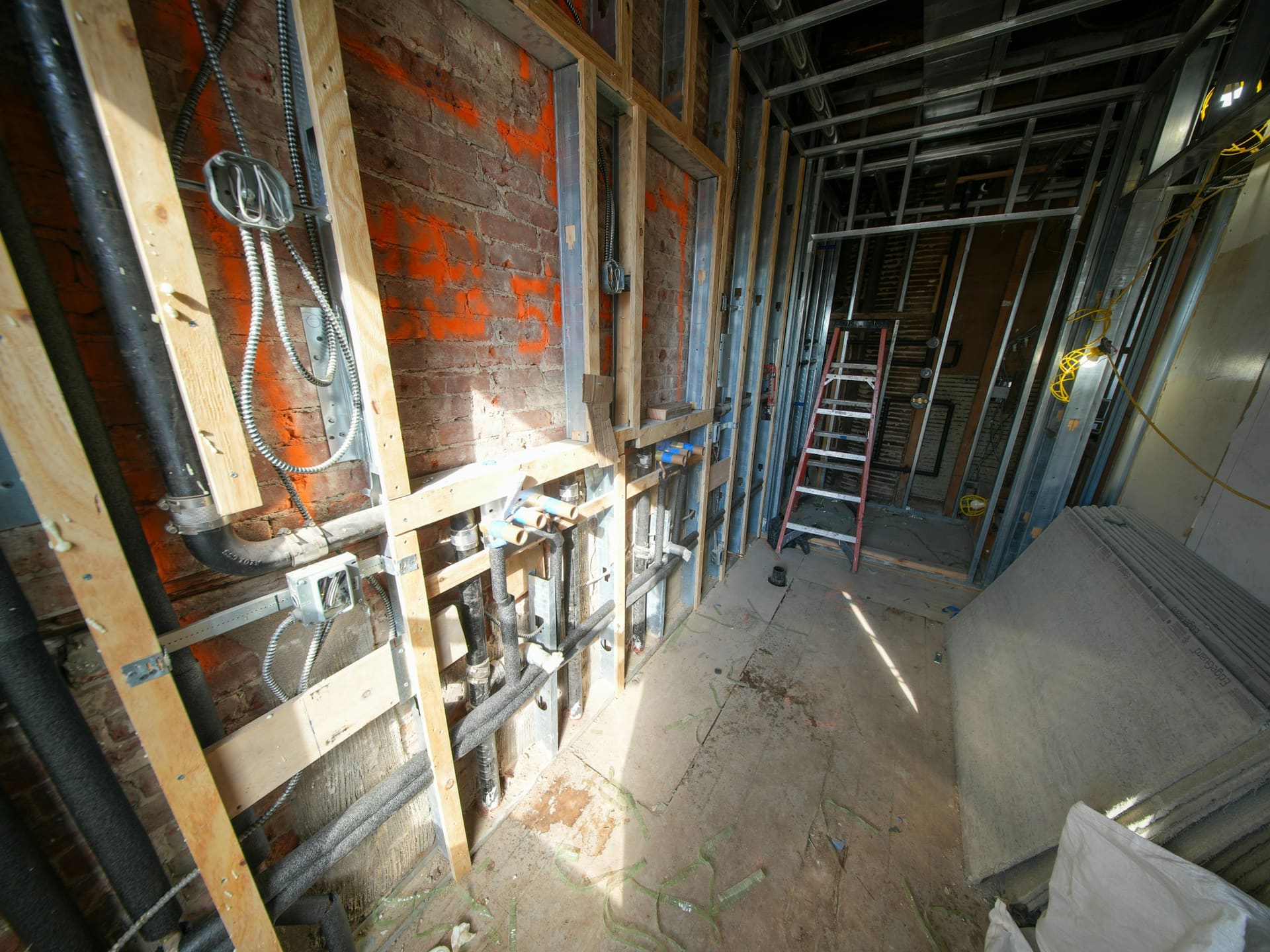
Programme dependencies
Four things that move electrical dates
These are stated openly at the outset because they affect programme more than the electrical work itself does.
- P1
Areas ready on time
First-fix work depends on structure, studwork and openings being complete and accessible.
- P2
Decisions made in time
Accessory positions, fittings and controls need confirming before the point at which they are installed.
- P3
Products available
Lead times on fittings, controls and distribution equipment can determine the sequence, not the other way round.
- P4
Close-up sequencing
Areas closed before electrical work is complete become revisits, which affects both cost and programme.
Electrical enquiry
Need electrical support on a project?
Tell us about the project, the stages involved, the programme, the site arrangements and what the electrical package needs to cover.